
Market Outlook
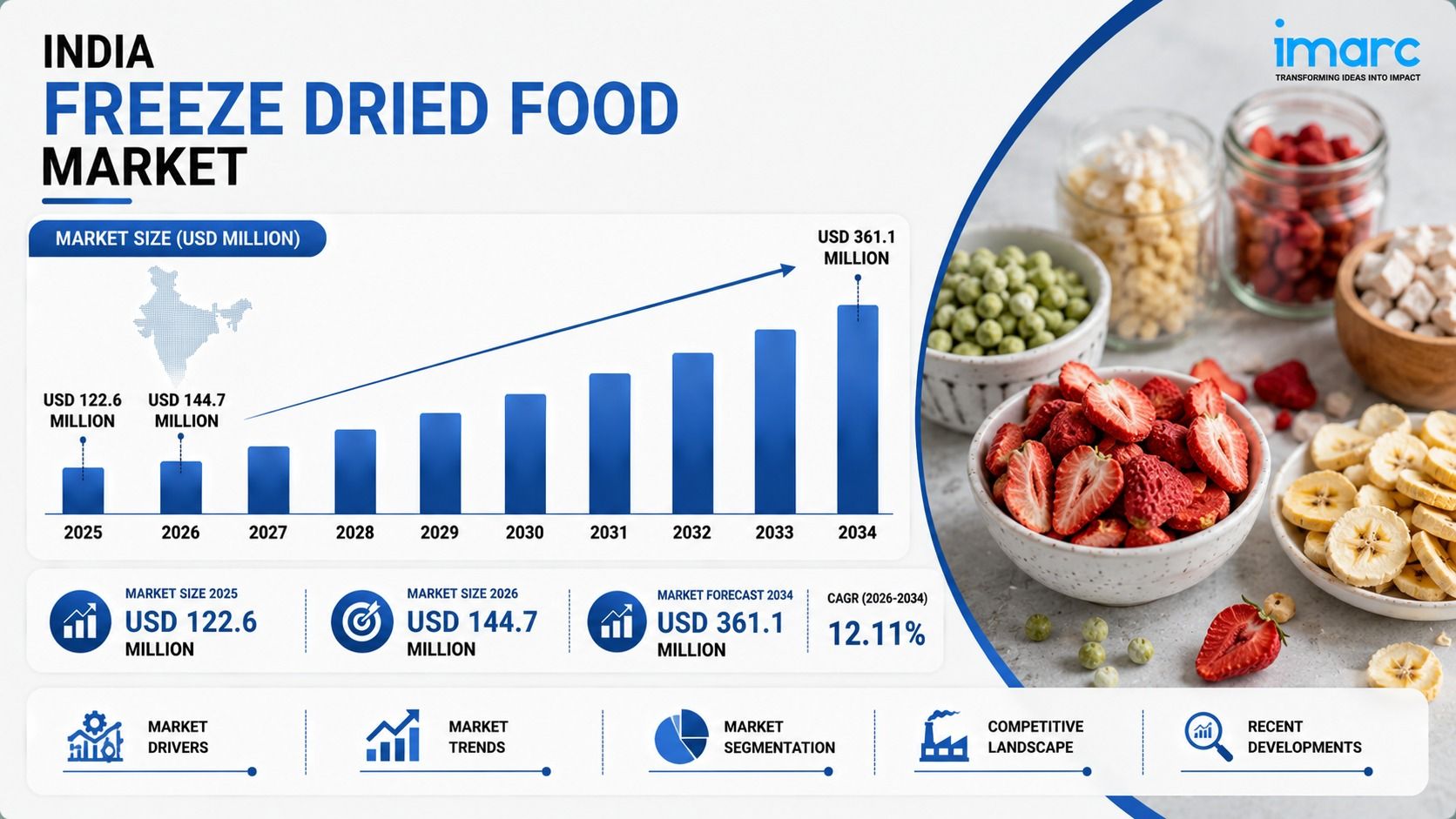
The India freeze dried food market size increased from USD 122.6 Million in 2025 to USD 144.7 Million in 2026. Looking forward, the market is projected to reach USD 361.1 Million by 2034, exhibiting a robust compound annual growth rate (CAGR) of 12.11% during the forecast period from 2026 to 2034.
The Indian food preservation and processing ecosystem is undergoing a profound technological transformation, shifting from conventional hot-air dehydration to advanced lyophilization (freeze-drying). Historically confined to niche military rations and aerospace applications, freeze-dried technology is rapidly entering the mainstream commercial and retail sectors. This pivot is fundamentally driven by the rising urban demand for clean-label, preservative-free foods that retain their original cellular structure, vibrant color, and over 90% of their raw nutritional profile.
Furthermore, the industry is witnessing aggressive backward integration by domestic food tech startups and large FMCG conglomerates. As the tropical Indian climate presents persistent cold-chain logistics and shelf-life challenges, freeze-drying offers a highly resilient, room-temperature-stable solution for highly perishable goods like seasonal fruits, premium vegetables, and dairy. Supported by the rapid expansion of direct-to-consumer (D2C) channels and escalating B2B demand from the bakery and confectionery sectors, the India freeze dried food market stands as a highly dynamic, premium-growth vertical within the country's modernized food economy.
Market Snapshot
- Market Size in 2025: USD 122.6 Million
- Market Size in 2026: USD 144.7 Million
- Forecast Market Size by 2034: USD 361.1 Million
- CAGR (2026-2034): 12.11%
- Key Types: Freeze-Dried Fruits, Freeze-Dried Vegetables, Freeze-Dried Beverages, Freeze-Dried Dairy Products, Freeze-Dried Meat and Seafood
- Key End Users: Food and Beverage Industry, Hotels and Restaurants, Household
- Key Distribution Channels: Supermarkets and Hypermarkets, Specialist Retailers, Convenience Stores
What are the Growth Factors of the India Freeze Dried Food Market?
- Rising Demand for Clean-Label and Preservative-Free Nutrition: Health-conscious urban consumers are heavily scrutinizing ingredient lists, aggressively pivoting away from snacks laden with synthetic preservatives, added sugars, and artificial flavorings. Freeze-drying relies purely on physics (sublimation) rather than chemicals to preserve food, making it the ultimate clean-label solution for producing 100% natural fruit and vegetable snacks.
- B2B Expansion in the Food and Beverage Industry: The commercial Food and Beverage (F&B) sector acts as a massive volumetric growth engine. Bakeries, breakfast cereal manufacturers, and artisanal chocolatiers rely heavily on freeze-dried fruit powders, flakes, and cuts (like strawberries and mangoes) to introduce intense, natural flavors and textures without adding moisture that could compromise product shelf life.
- Bypassing the Fragmented Cold-Chain Infrastructure: India's tropical climate and fragmented cold-chain logistics historically lead to massive post-harvest losses. Freeze-dried products do not require continuous refrigeration during transit or storage. This logistical advantage drastically lowers supply chain costs for manufacturers and enables nationwide distribution of premium perishable items to tier-2 and tier-3 cities.
- Surge in Outdoor Recreation and Trekking Culture: The rapidly expanding Indian adventure tourism, hiking, and mountaineering sectors generate targeted demand for ultra-lightweight, high-calorie, and shelf-stable meals. Freeze-dried foods are highly favored by this demographic due to their exceptional portability and instant rehydration capabilities in rugged environments.
- Rapid E-Commerce and D2C Penetration: The proliferation of quick-commerce (e.g., Blinkit, Zepto) and specialized D2C platforms provides premium freeze-dried brands with direct access to affluent millennials. These digital channels bypass traditional retail bottlenecks, facilitating rapid product discovery, consumer education, and repeat subscription purchases.
Request a Sample Copy of this Report: https://www.imarcgroup.com/india-freeze-dried-food-market/requestsample
What Are the Key Trends Shaping the Market?
- Explosive Growth of Freeze-Dried Fruits as Standalone Snacks: Freeze-dried fruits—particularly mango, pineapple, and strawberry—are dominating new product launches. Marketed as premium, guilt-free, on-the-go snacks for children and working professionals, these products offer the satisfying crunch of potato chips but the nutritional density of fresh fruit.
- Emergence of Freeze-Dried Dairy and Probiotics: The market is experiencing a surge in innovative dairy applications, such as freeze-dried yogurt bites and cheese crisps. Because the low-temperature lyophilization process successfully preserves heat-sensitive probiotic bacteria, these products are gaining massive traction as functional, immunity-boosting snacks.
- Integration into Premium Pet Food: Aligning with the humanization of pets, the premium pet food segment is rapidly adopting freeze-dried technology. Manufacturers are introducing freeze-dried raw meat toppers and treats, offering pet owners a highly nutritious, pathogen-free alternative to traditional kibble without the hassle of raw meat preparation.
- Strategic Shift Toward Sustainable Packaging: Given that freeze-dried foods are highly hygroscopic (prone to absorbing moisture from the air), packaging is critical. However, to align with the eco-conscious values of their target demographic, brands are actively shifting from unrecyclable multi-layer metalized pouches to high-barrier, mono-material recyclable films and premium glass jars.
- Localization of High-Capacity Lyophilization Equipment: To reduce the prohibitive costs of importing European and American freeze-drying machinery, Indian engineering firms are increasingly designing and manufacturing localized, energy-efficient lyophilization units. This deepens domestic processing capacity and allows smaller food-tech startups to enter the market.
What Are the Major Market Challenges?
- Extreme Capital and Operational Intensity: Freeze-drying is arguably the most expensive commercial food preservation method available. The process requires highly specialized vacuum chambers and consumes massive amounts of electricity to sustain ultra-low temperatures and extended drying cycles (often 24 to 48 hours). This high operational expenditure strictly limits market entry for undercapitalized players.
- Prohibitive Premium Pricing for Mass Consumers: The combination of low product yield (as water weight is entirely removed) and high processing costs translates to exceptionally steep retail prices. Consequently, freeze-dried foods are largely confined to affluent urban demographics and premium commercial buyers, acting as a severe barrier to mass-market, volumetric penetration across India.
Explore the Full Report with Charts, Table of Contents, and List of Figures: https://www.imarcgroup.com/india-freeze-dried-food-market
How Is the Market Segmented?
- By Type: Segmented into Freeze-Dried Fruits, Freeze-Dried Vegetables, Freeze-Dried Beverages, Freeze-Dried Dairy Products, Freeze-Dried Meat and Seafood, and Others. Freeze-Dried Fruits and Vegetables command the highest market momentum, driven by immense B2B demand from the bakery and ready-to-eat meal sectors, alongside rapid B2C snacking adoption.
- By Distribution Channel: Categorized into Supermarkets and Hypermarkets, Specialist Retailers, Convenience Stores, and Others. Supermarkets and Hypermarkets lead physical distribution by dedicating premium shelf space to health foods, allowing consumers to visually inspect the unique texture of the products. Online D2C channels represent the most aggressive incremental growth vector.
- By End User: Divided into Hotels and Restaurants, Household, Food and Beverage Industry, and Others. The Food and Beverage Industry dictates the bulk volumetric demand, utilizing freeze-dried ingredients as critical inputs for cereals, soups, and confectionery. The Household segment is expanding rapidly as consumers substitute traditional fried snacks with freeze-dried alternatives.
- By Region: Geographically mapped across North India, South India, East India, and West India. North India and West India capture the leading market shares. This dominance is anchored by a dense concentration of modern retail infrastructure, highly affluent urban consumer bases in Delhi-NCR and Mumbai, and a massive regional food processing industrial footprint.
Competitive Landscape
The Indian freeze dried food ecosystem features a fragmented but rapidly formalizing competitive structure. The landscape pits established, large-scale agricultural processors focusing on bulk B2B ingredient supply against a vibrant, agile layer of digital-first D2C startups targeting the premium retail snacking segment. Competitive supremacy is currently dictated by the ability to secure continuous high-quality raw material supply, optimize energy-intensive manufacturing cycles, and build compelling clean-label brand narratives.
Recent News or Developments
Empire Freezing and Drying Secures Sunkist License (March 2025):
In a major move to premiumize the domestic market, Empire Freezing and Drying officially received the manufacturing and distribution license for the Sunkist brand in India. The rollout introduces premium, internationally sourced freeze-dried fruit products and specialized coatings, targeting India's affluent, brand-conscious demographic.
Unilever Expands Frozen and Freeze-Dried Portfolio (September 2025):
Recognizing the escalating demand for convenient, long-shelf-life meals, FMCG titan Unilever launched an expansive new line of frozen and freeze-dried ready-to-eat meals specifically tailored for the Indian palate. The launch leverages advanced lyophilization to guarantee nutrient retention in complex local recipes.
Moon Store Launches Dedicated D2C Platform (June 2024):
Indian specialized retailer Moon Store officially launched its dedicated e-commerce website, heavily focused on marketing freeze-dried mangoes and strawberries directly to consumers. The launch highlights the rapid transition of freeze-dried fruits from niche B2B ingredients into mainstream, direct-to-consumer lifestyle snacks.
Customization Note: If you require any specific information not covered within this report’s scope, we will provide it as part of the customization.
Request Report Customization: https://www.imarcgroup.com/request?type=report&id=29888&flag=E
Frequently Asked Questions (FAQs)
- What is the size of the India Freeze Dried Food Market? The India freeze dried food market size reached USD 144.7 Million in 2026.
- What is the projected growth rate? The market is projected to reach USD 361.1 Million by 2034, exhibiting a robust compound annual growth rate (CAGR) of 12.11% during the forecast period from 2026 to 2034.
- Which product types dominate the market? Freeze-dried fruits and vegetables capture the majority share, driven by their extensive B2B utilization in breakfast cereals, baked goods, and ready-to-eat meals, as well as rising popularity as standalone health snacks.
- What are the primary growth drivers? Key drivers prominently include surging consumer demand for clean-label, preservative-free foods, the logistical advantages of bypassing traditional cold-chain infrastructure, and rapid expansion in the domestic food processing sector.
- What is the major challenge facing this market? The extreme capital and energy intensity of lyophilization equipment results in prohibitive retail pricing, which currently restricts volumetric adoption strictly to affluent urban consumers and premium commercial buyers.